
Arthroscopic Shoulder Surgery in Mysore & Beyond
Comprehensive keyhole shoulder surgery for instability, rotator cuff tears, labral injuries, impingement, and complex reconstructions — by Dr. Shirish M. Narsapur, serving patients of all ages across India and internationally.
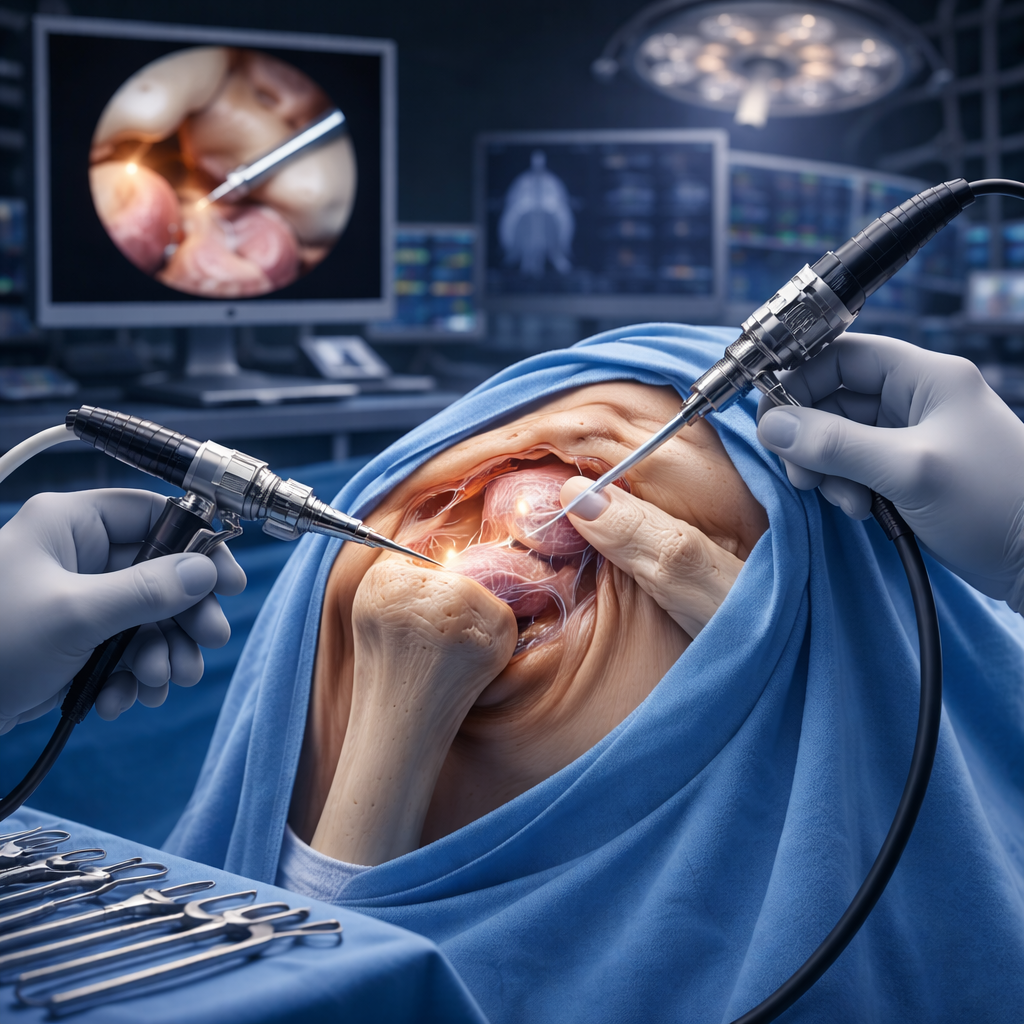
What Is Arthroscopic Shoulder Surgery?
Arthroscopic shoulder surgery — also known as keyhole shoulder surgery — is a minimally invasive approach in which a tiny high-definition camera (arthroscope) is inserted into the shoulder joint through a small incision. The surgeon views the joint on a screen in real time and uses specialised instruments to repair, reconstruct, or decompress damaged structures.
Compared to traditional open shoulder surgery, arthroscopy causes significantly less trauma to the surrounding muscles and tissue, carries a lower risk of infection, produces less post-operative pain, and allows for a faster recovery. The vast majority of shoulder conditions that previously required open surgery are now effectively treated arthroscopically.
Dr. Shirish Narsapur brings extensive expertise across the full spectrum of arthroscopic shoulder procedures — from straightforward subacromial decompressions to complex reconstructions including superior capsular reconstruction and multi-anchor rotator cuff repairs.
Shoulder Procedures We Specialise In
Rotator Cuff Repair
Bankart Repair
Remplissage
Bone Grafting
Superior Capsular Reconstruction (SCR)
SLAP Repair
Subacromial Decompression
Shoulder Cyst Decompression
Who we Treat
Athletes & Sports Persons
Active Working Adults
Elderly Patients
Individually Tailored Rehabilitation
Full strength restoration; return to overhead activity
Return to contact sport / competitive play
Return to overhead sport at full capacity
Return to daily activity and overhead work
Progressive strengthening; tailored to patient goals
Graft incorporation + progressive return to activity
✦ All timelines are approximate and individualised. Dr. Narsapur designs each rehabilitation plan based on surgical findings, patient age, and specific activity goals.
Why chose Dr. Shirish M Narsapur
Full Spectrum of Shoulder Procedures
Early Intervention Philosophy
Individually Tailored Rehabilitation
All Age Groups Welcome
International Practice, Local Accessibility
Ethical, Patient-First Counsel
Frequently Asked Questions
What is a rotator cuff tear and why is it commonly neglected?
The rotator cuff is a group of four muscles and their tendons that stabilise the shoulder and enable powerful, precise movement. A rotator cuff tear — a partial or complete rupture of one or more of these tendons — is among the most common and most neglected shoulder conditions in India. Patients often dismiss the pain and weakness as a normal part of ageing or a minor muscle problem, and delay seeking care for months or years.
This delay has serious consequences. When treated early, rotator cuff tears respond excellently to arthroscopic repair — most patients achieve full, pain-free shoulder function with a structured rehabilitation programme. Left untreated, however, the tendon retracts further, the muscle undergoes fatty degeneration and permanent atrophy, and the joint surfaces progressively deteriorate. This leads to rotator cuff arthropathy — a severe form of shoulder arthritis that ultimately requires a reverse total shoulder replacement: a significantly more complex, costly, and physically demanding procedure with a far longer and more difficult recovery.
Persistent shoulder pain or weakness lasting more than a few weeks warrants early assessment. Early treatment is always the better outcome.
What shoulder conditions can be treated arthroscopically?
Dr. Shirish Narsapur performs the full spectrum of arthroscopic shoulder procedures including: rotator cuff repair (partial and full-thickness tears), Bankart repair for shoulder dislocation and instability, Remplissage for Hill-Sachs lesions, bone grafting for significant glenoid bone loss, superior capsular reconstruction (SCR) for massive irreparable rotator cuff tears, SLAP (superior labrum anterior to posterior) repair, subacromial decompression for impingement syndrome, shoulder cyst decompression, and repair of cartilage and labral injuries.
What is Bankart repair and who needs it?
A Bankart repair is an arthroscopic procedure for shoulder instability and recurrent dislocation. When the shoulder dislocates, the anterior labrum (the cartilage rim of the socket) commonly tears away — a Bankart lesion. Arthroscopic repair reattaches the labrum to the glenoid using suture anchors, restoring stability. It is strongly recommended for young and active patients who have experienced a dislocation, as the risk of re-dislocation without surgery is very high in this group, and repeated dislocations cause progressive bone and cartilage damage.
What is Remplissage and when is it performed alongside Bankart repair?
Remplissage (French for “filling”) is an arthroscopic procedure performed in conjunction with Bankart repair when shoulder instability is accompanied by a significant Hill-Sachs defect — a compression fracture on the back of the humeral head caused by the shoulder dislocating. If this defect is large enough, it can “engage” with the front of the glenoid during shoulder movement, causing re-dislocation. Remplissage fills the defect with the posterior capsule and infraspinatus tendon, preventing engagement and dramatically reducing re-dislocation risk.
What is Superior Capsular Reconstruction (SCR)?
Superior Capsular Reconstruction (SCR) is an advanced arthroscopic procedure for patients with massive, irreparable rotator cuff tears — where the damage is so extensive that direct repair of the tendon is no longer possible. A graft is used to reconstruct the superior capsule of the shoulder joint, restoring the force balance across the glenohumeral joint, reducing superior migration of the humeral head, relieving pain, and improving function. SCR offers an important surgical option for active patients who are not yet appropriate candidates for shoulder replacement.
What is a SLAP tear and who is at risk?
A SLAP (Superior Labrum Anterior to Posterior) tear is an injury to the top portion of the labrum where the biceps tendon attaches. It is particularly common in overhead athletes — cricketers, swimmers, volleyball players, tennis players — as well as from falls or sudden traction injuries to the arm. Symptoms include deep, aching shoulder pain, a sense of catching or locking, and weakness with overhead activity. Arthroscopic SLAP repair reattaches or trims the torn labrum depending on the type of tear and patient profile.
What is subacromial decompression?
Subacromial decompression is an arthroscopic procedure to treat shoulder impingement syndrome, where the rotator cuff tendons are repeatedly pinched beneath the acromion bone during arm elevation. Over time this causes pain, inflammation of the bursa, and progressive tendon damage. Arthroscopic decompression removes bone spurs (acromioplasty) and the inflamed bursa, creating more space for the cuff. It is frequently combined with rotator cuff repair when a tear is present alongside impingement.
Is arthroscopic shoulder surgery suitable for elderly patients?
Yes, absolutely. Dr. Narsapur treats patients across all age groups, including elderly individuals with rotator cuff tears, impingement, and instability. The minimally invasive nature of arthroscopy makes it particularly well-suited for older patients — it involves less surgical trauma, lower blood loss, a reduced risk of wound complications, and a faster recovery compared to open surgery. Many elderly patients who undergo timely arthroscopic treatment regain significant pain-free function, independence, and quality of life.
What is the recovery time after arthroscopic shoulder surgery?
Recovery varies by procedure. Subacromial decompression allows return to daily activity within 6–10 weeks. Rotator cuff repair requires 4–6 months of rehabilitation to restore full strength. Bankart and SLAP repairs in athletes follow sport-specific protocols with return to full competitive play at 4–6 months. More complex procedures such as superior capsular reconstruction may take 6–9 months. Every patient receives an individually tailored rehabilitation programme — timelines are always adapted to the person, not just the procedure.
Where does Dr. Narsapur perform arthroscopic shoulder surgery?
Dr. Shirish Narsapur performs arthroscopic shoulder surgery across multiple locations: Mysore, Bangalore, and Raichur in Karnataka, India — and internationally in Muscat, Oman. Contact the clinic at +91 9845509184 or care@jointsurgeonindia.com to arrange a consultation at your nearest location.