
Arthroscopic Knee Surgery in Mysore & Beyond
Expert keyhole knee surgery for ACL tears, meniscus injuries, cartilage damage, and ligament conditions — by Dr. Shirish M. Narsapur, with a pioneering surgical technique that sets the standard in India and internationally.
The Narsapur Freehand ACL Reconstruction Technique
Dr. Shirish Narsapur has pioneered a self-devised freehand technique for ACL reconstruction — eliminating the conventional targeting guide and relying on deep anatomical expertise and surgical precision. The result is a procedure that takes over 25% less time than standard methods, with anatomically accurate graft placement, reduced anaesthesia exposure, and measurably better outcomes for patients and athletes alike.
What Is Arthroscopic Knee Surgery?
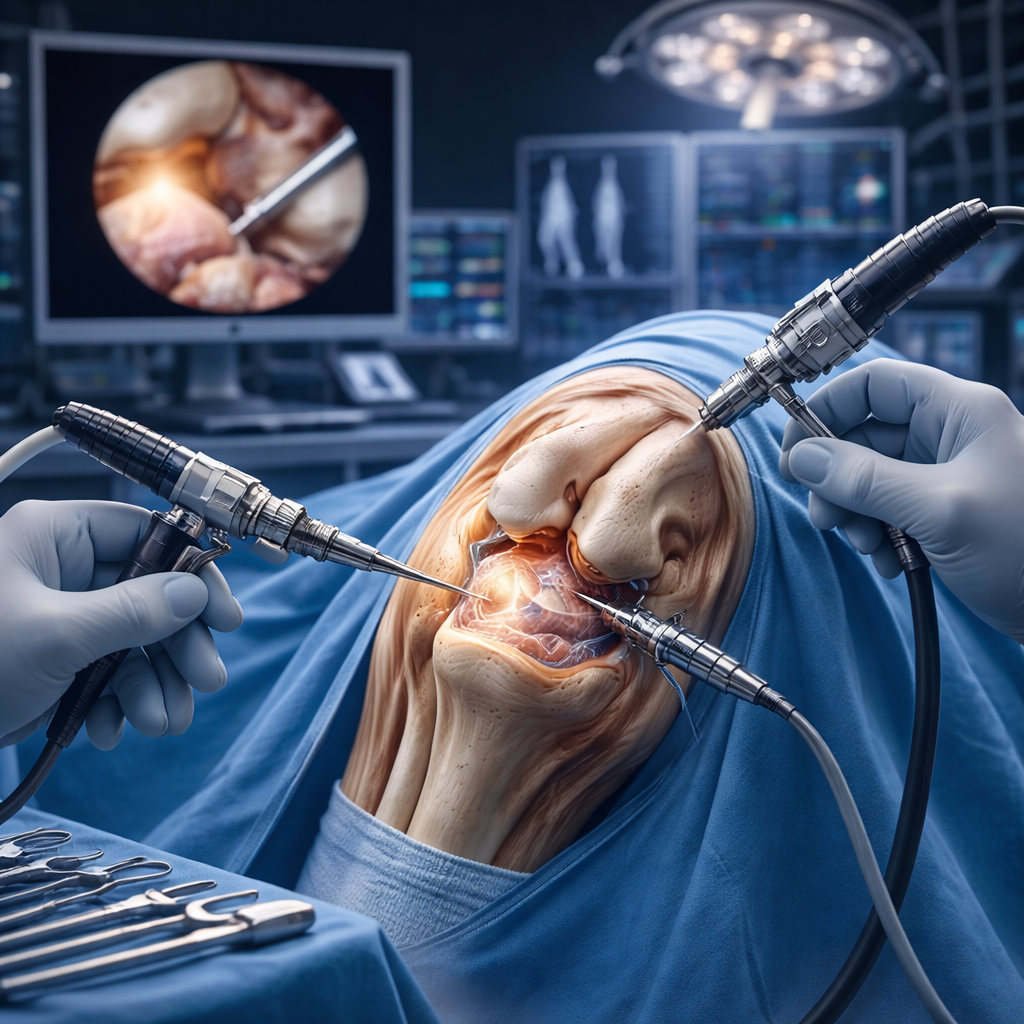
Arthroscopic knee surgery — commonly called keyhole surgery — is a minimally invasive surgical technique in which a tiny camera (arthroscope) is inserted into the knee through a small incision, allowing the surgeon to see, diagnose, and treat damage inside the joint in real time.
Unlike traditional open surgery, arthroscopy requires only 2–3 small incisions of just a few millimetres. Specialised instruments are passed through these portals to repair torn ligaments, remove or repair damaged meniscus tissue, treat cartilage defects, and address other intra-articular conditions — all without the trauma and prolonged recovery associated with conventional open surgery.
Dr. Narsapur uses a philosophy of minimal required hardware — meaning only the implants and fixation devices that are truly necessary are used, reducing the burden on the body and simplifying recovery.
Knee Conditions We Treat
ACL Tear (Anterior Cruciate Ligament)
PCL & Multi-Ligament Injuries
Meniscus Tears
Cartilage (Chondral) Damage
Patellofemoral Problems
Sports Knee Injuries
The Surgical Process
Every arthroscopic knee procedure at Joint Surgeon India follows a meticulous, patient-centred pathway.
Dr. Narsapur conducts a thorough clinical examination and reviews your imaging (MRI, X-rays) to confirm the diagnosis and determine the best surgical approach for your specific condition.
Blood tests, anaesthesia evaluation, and any additional investigations are arranged. You receive detailed pre-operative instructions to ensure you are fully prepared for the day of surgery.
Under anaesthesia, 2–3 small portals are created around the knee. Dr. Narsapur inserts the arthroscope and treats the damaged structures with precision — using his freehand technique for ligament reconstruction and minimal-hardware philosophy for all repairs.
Most patients are mobilised on the day of or day after surgery. Pain is managed with prescribed medication, and a personalised physiotherapy protocol begins early to protect the repair and restore movement.
Structured rehabilitation guides you from protected movement to full daily activity by 6 weeks, and full return to sport — including competitive athletics — within 6 months.
Recovery Timeline
Arthroscopic surgery enables a significantly faster recovery than open procedures. Here is what to expect at each stage:
Day 1–3
Mobilising with support. Swelling managed. Physio begins.
Week 1–2
Walking with reducing support. Range of motion exercises.
Week 3–6
Strengthening programme. Return to daily life & driving.
Month 3–4
Light jogging, sport-specific conditioning begins.
Month 6
Return to full competitive sport and unrestricted activity.
Why Choose Dr. Shirish Narsapur?
Pioneering Surgical Technique
1000+ Procedures Performed
Minimal Hardware Philosophy
International Practice
Ethical, Affordable Care
Condition-Specific Approach
Frequently Asked Questions
What conditions can be treated with arthroscopic knee surgery?
Arthroscopic knee surgery can treat a wide range of knee conditions including ACL (anterior cruciate ligament) tears, PCL tears, meniscus tears, cartilage damage (chondral injuries), loose bodies inside the joint, synovitis, and patellofemoral problems. Dr. Shirish Narsapur evaluates each condition individually and uses only the minimal hardware required for optimal results.
What is Dr. Narsapur's freehand ACL reconstruction technique?
Dr. Shirish Narsapur has developed a self-devised freehand technique for ACL reconstruction that eliminates the need for a targeting guide during tunnel placement. This proprietary approach reduces surgical time by more than 25% compared to conventional methods, while maintaining precision and improving anatomical placement of the graft. The result is reduced anaesthesia exposure, less operative trauma, and faster recovery for the patient.
How long does arthroscopic knee surgery take?
What is the recovery time after arthroscopic knee surgery?
Most patients return to daily activities and normal walking within 6 weeks of arthroscopic knee surgery. Athletes and those seeking full return to active sports typically achieve this within 6 months, following a structured physiotherapy programme. Recovery timelines may vary based on the complexity of the procedure and the individual patient’s condition.
Is arthroscopic knee surgery painful?
Arthroscopic knee surgery is performed under anaesthesia, so there is no pain during the procedure. Post-operative discomfort is typically mild and well-managed with prescribed pain relief. Because the procedure uses small incisions rather than open surgery, patients experience significantly less post-operative pain and a faster, more comfortable recovery compared to traditional knee surgery.
Can athletes return to competitive sport after arthroscopic knee surgery?
Yes. Dr. Shirish Narsapur treats both competitive athletes and general patients with sports-related knee injuries. His surgical protocols and rehabilitation pathways are specifically designed to return athletes to full competitive sport within 6 months of surgery, with the goal of restoring pre-injury level of performance.
Where does Dr. Narsapur perform arthroscopic knee surgery?
Dr. Shirish Narsapur performs arthroscopic knee surgery across multiple locations in India — including Mysore, Bangalore, and Raichur — and internationally in Muscat, Oman. Contact the clinic at +91 9845509184 or care@jointsurgeonindia.com to find the most convenient location for your consultation.
How much does arthroscopic knee surgery cost in Mysore?
The cost of arthroscopic knee surgery varies depending on the type and complexity of the procedure, the implants used, and the hospital facility. Dr. Narsapur is committed to ethical, affordable care and transparent pricing. Please contact the clinic directly at +91 9845509184 or care@jointsurgeonindia.com for a personalised estimate.
Do I need an MRI before arthroscopic knee surgery?
In most cases, an MRI scan is recommended prior to arthroscopic knee surgery to assess the full extent of the injury and plan the procedure accurately. Dr. Narsapur reviews all imaging personally during your consultation and will advise on any additional investigations required for your specific condition.
What is the difference between arthroscopic surgery and open knee surgery?
Arthroscopic (keyhole) knee surgery uses tiny incisions of just a few millimetres to insert a camera and instruments, avoiding the large incision and extensive tissue disruption of open surgery. This results in less tissue damage, lower infection risk, significantly less post-operative pain, a shorter hospital stay, and a faster return to daily life. Most conditions that once required open surgery are now effectively treated arthroscopically.